Public PhD defense

Hybrid computational methods
for 6G exposure assessment

Robin Wydaeghe

Supervisors

prof. dr. ir. Wout Joseph

prof. dr. ir. Emmeric Tanghe

At higher frequencies, absorption stays closer to the skin

ICNIRP limits: basic restrictions and reference levels

Method: ray tracing with FDTD or the surface law

Setup: FDTD on two adult and two child phantoms

  • Duke (34), Ella (26), Eartha (8), Thelonious (6)
  • 550 simulations: all four up to 15 GHz, Thelonious also at 26 GHz
  • Plane waves at 1 W/m², 6 directions × 2 polarizations below 6 GHz
  • Focused case: four waves phased to meet at the phone
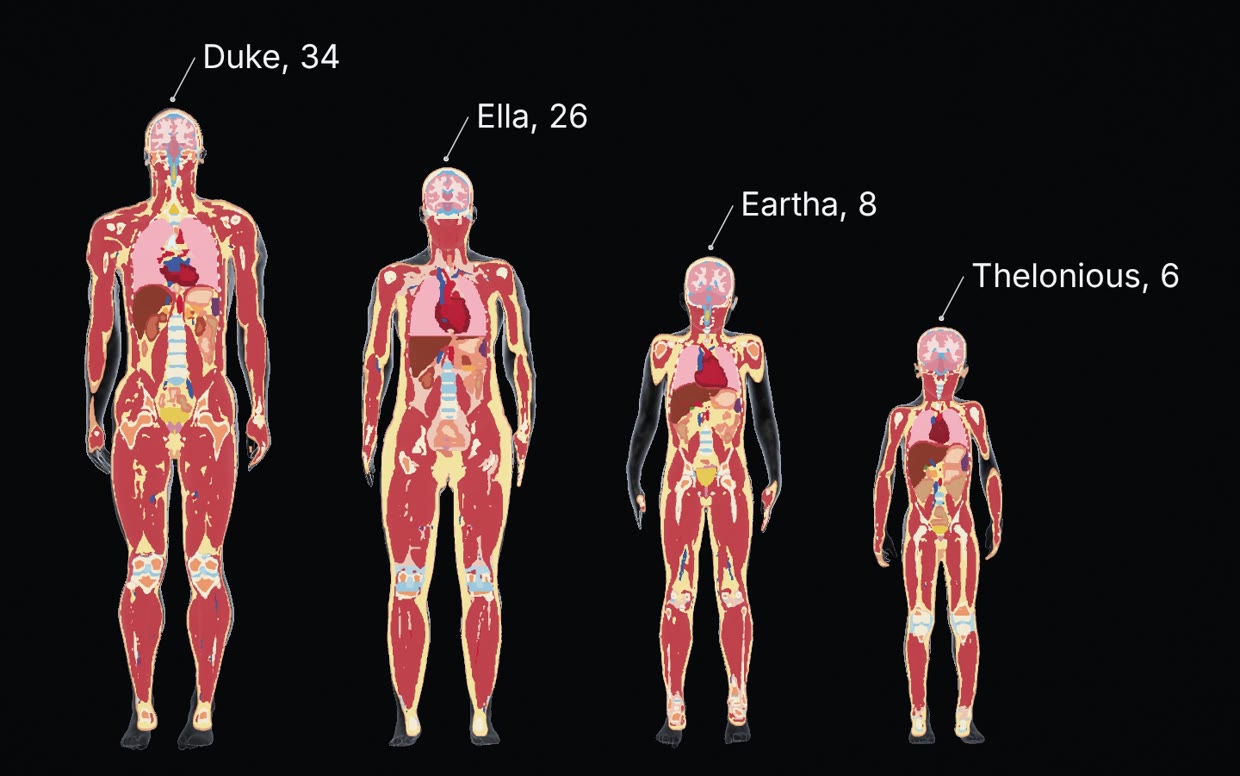
The four phantoms

Chapter 2

Children’s whole-body SAR is 1.5 to 1.9 times adults’

Above 6 GHz, skin SAR increases and eye SAR decreases

Setup: 25 antennas in a factory hall at 3.5 and 28 GHz

  • 50 × 50 × 10 m hall, 100 random machine layouts per case
  • 25 antennas, collocated (0.5 λ apart) or distributed (10 m apart), equal total power
  • MRT (maximum-ratio transmission): antenna weights chosen for maximum signal at the phone
  • Phone 2 cm behind the right ear of the MIDA head model
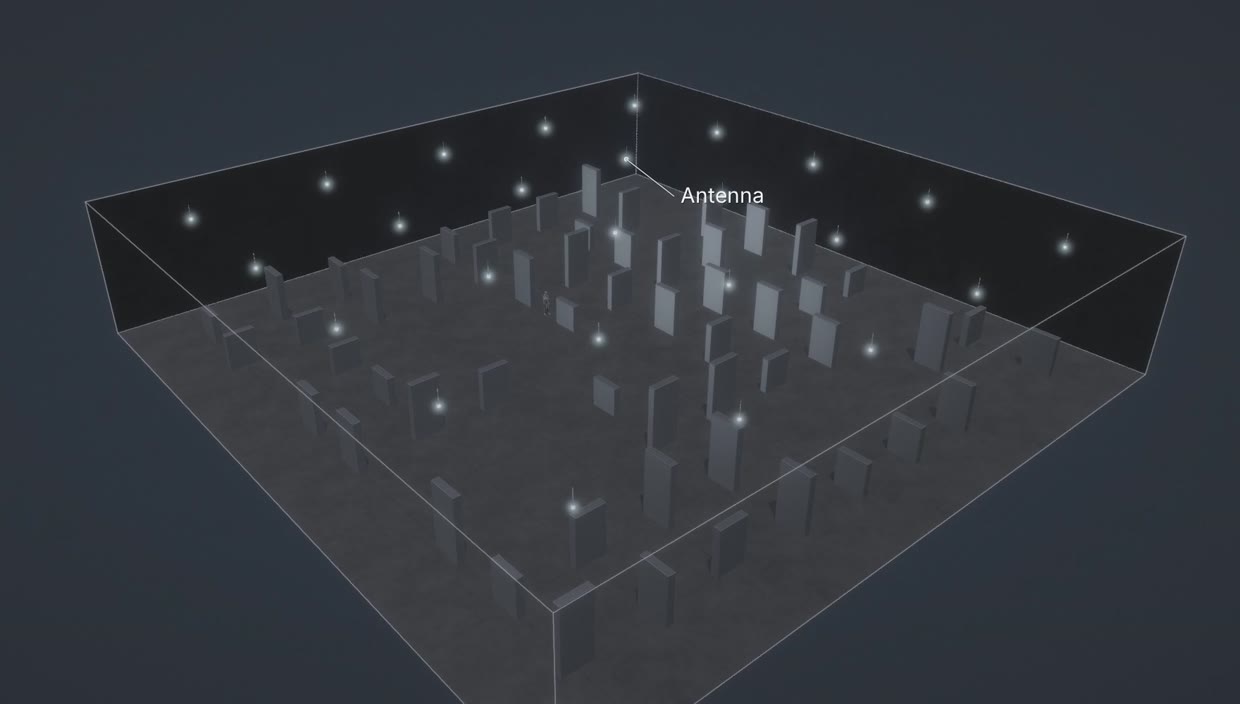
The factory hall with 25 antennas

Chapter 3

Method: a Huygens box couples ray tracing to FDTD

Fields add before squaring, which creates a cross term

E1 E2

Results: distributed antennas lower exposure 2 to 3 times

Setup: a six-minute walk through New York at 28 GHz

  • World Trade Center to Liberty Street, phone at the right ear
  • City mesh from photogrammetry, six material classes
  • Ray tracing for the buildings, QuaDRiGa for the fine detail, 316 snapshots
  • Two-stage MRT: +10 dB at the phone against a person 5 m away
  • Huygens box around the ear, FDTD inside
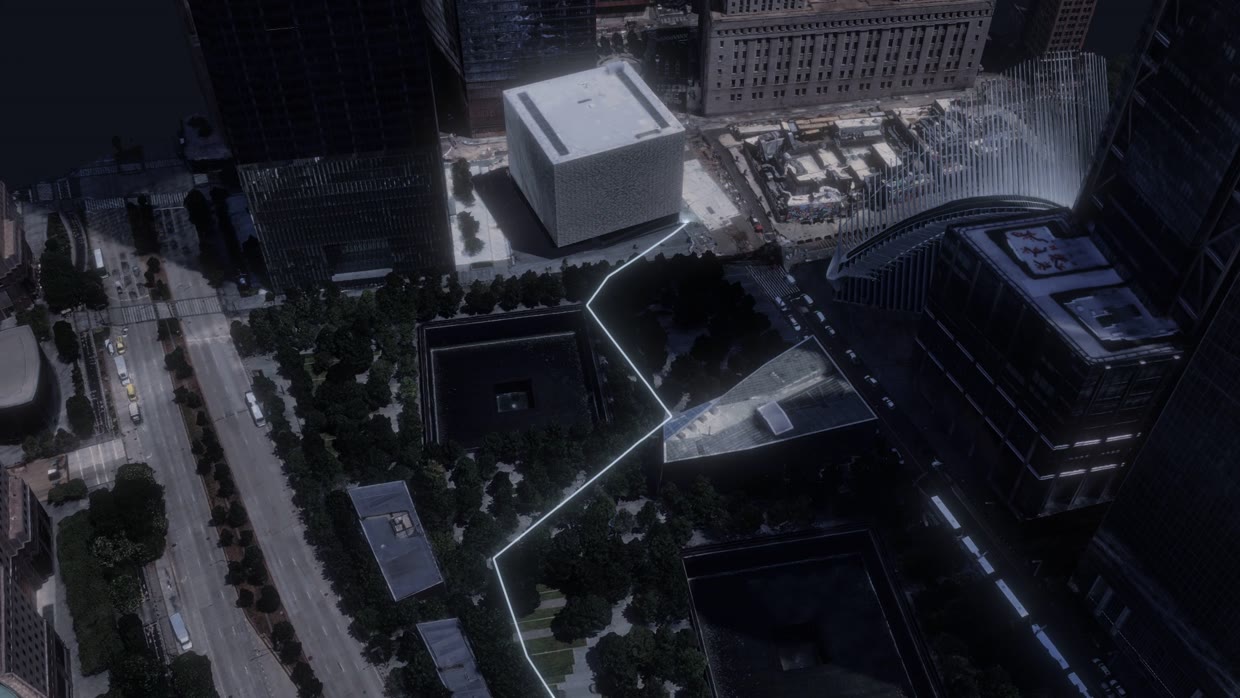
The route past the World Trade Center

Chapter 4

Results: a hotspot under 5 mm wide persists beside the ear

Setup: measurements in an anechoic room and a stairwell

  • Anechoic room, 26 GHz: four sets of four antennas aimed at one point
  • Probe on a robot: 50 × 50 cm plane, 3.33 mm steps, 50 hours
  • Stairwell, 28 GHz: five planes, 31 hours
  • Digital twin calibrated on three planes, tested blind on a fourth, in four rotations
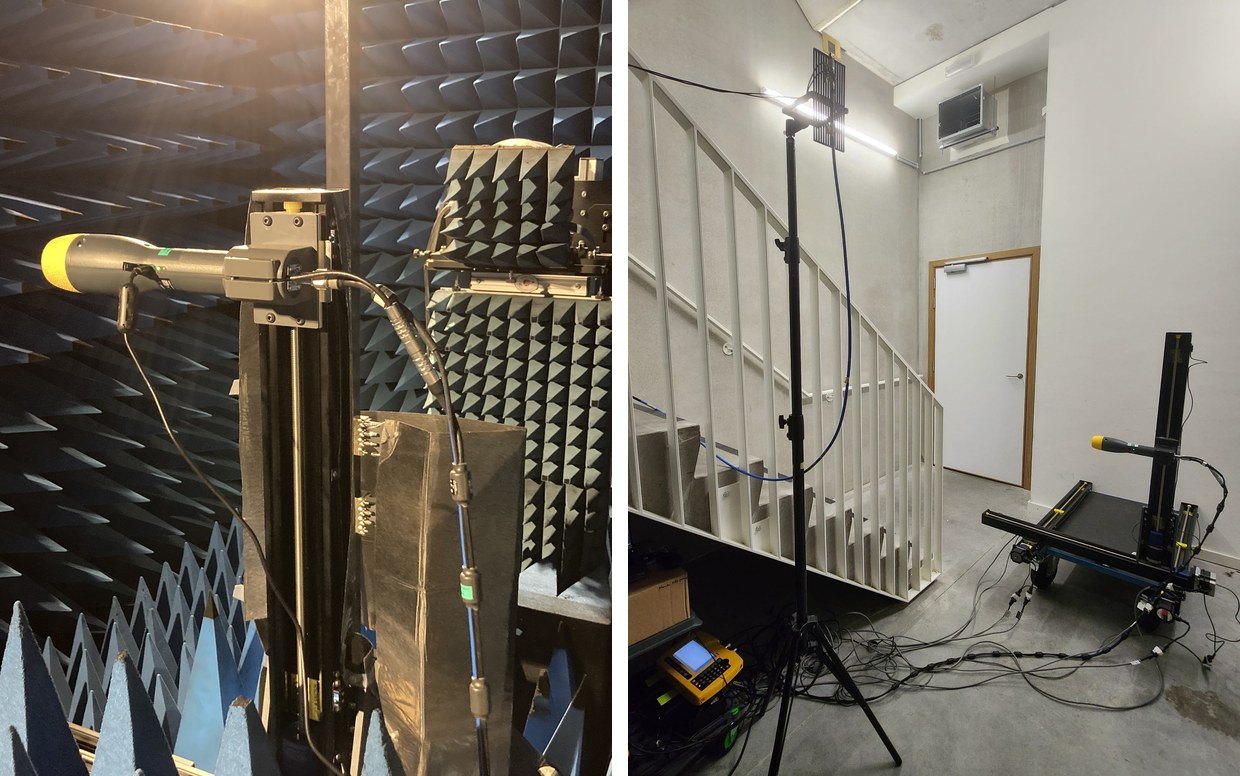
The anechoic room and the stairwell

Chapter 6

Results: the simulated hotspot agrees with the measured one

Results: interference spacings correlate at 0.55 to 0.79

Each new body, posture or frequency needs a new simulation

Method: closed-form absorption on the skin surface

  • Above 6 GHz, absorption stays in the top millimeters of skin
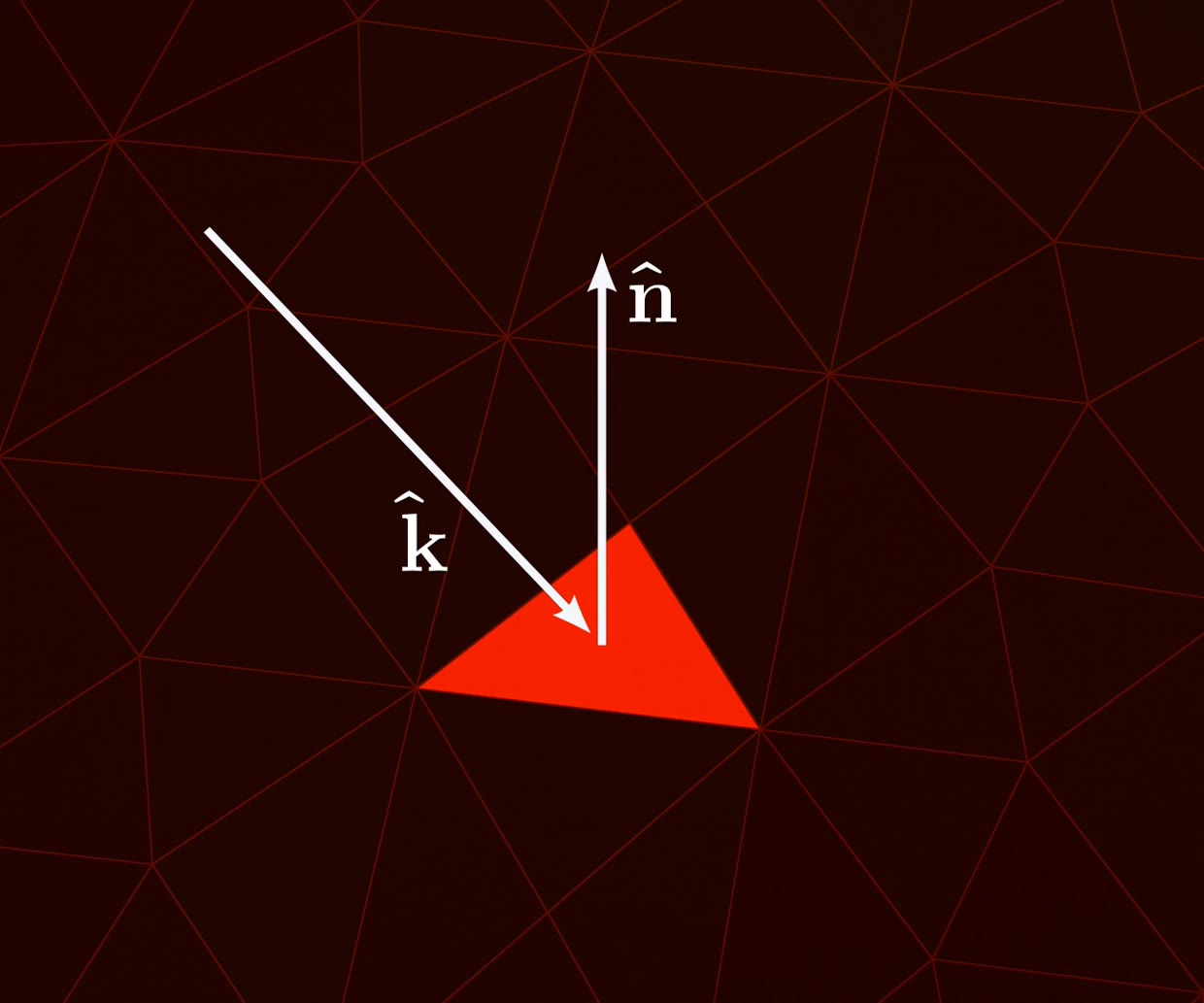
  • One closed-form expression per surface triangle, no volume, no time steps
  • Thelonious: 23,826 triangles, 0.787 m² of skin
  • All triangles at once on one GPU
One skin triangle with its normal and the wave direction

Chapter 5

The surface law multiplies transmission, angle and visibility

transmission into the skin skin normal, wave direction zero where the body shadows itself

Results: self-shading reduces the mean absorption by 13.5%

Validation: the law agrees with FDTD and five studies to 100 GHz

Setup: 746,496 body maps in the factory, 8 to 100 GHz

  • Four phantoms, eight frequencies, 16 rooms with and without line of sight
  • Arrays of 16, 64 and 256 antennas, phone 6 to 22 m away
  • MRT: 21 phone positions on the body. ECBF: six absorption limits
  • 2.2 hours on one GPU, about 10 ms per map

Chapter 5

Method: the same rays give the signal and the absorption matrix Q

Results: beamforming cuts absorption 6.3-fold at half signal

Setup: walking routes in ten cities at 15 GHz

  • Ten routes, 163 points, a 250 m city crop around each route
  • Rays traced backwards from the body into the surface law
  • Duke: 72.4 kg, 56,024 surface triangles
  • Whole-body SAR per transmitter density ρA and per watt of EIRP

Chapter 6

Results: median SAR differs 14-fold between city routes

Synthesis: the method each chapter uses at each scale

Conclusions

  • Far below the ICNIRP limits: at most 4% indoors, under 0.05% outdoors
  • Child whole-body SAR 1.5–1.9 times the adult value below 6 GHz
  • Distributed antennas lower exposure 2–3 times
  • Median SAR 14 times higher on the Mexico City route than in Milan
  • Surface law ÷ FDTD = 1.01 in whole-body power, 746,496 body maps in 2.2 hours
  • Beamforming against Q: half the signal, 6.3 times less absorbed

Outlook

  • Near field: phones and wearables on the body
  • Outdoor measurement campaign for the city model
  • Many bodies in one beamformer, dosimetry inside the network loop, about 10 ms per body
  • Child phantoms for 7.125–8.4 GHz, the band under study for WRC-27

Thank you

Robin Wydaeghe

https://phd.rwydaeghe.be/talk/

QR code for https://phd.rwydaeghe.be/talk/

Backup

Focused APD against the restriction, 7 to 15 GHz

Exposure per radiated watt and per incident watt

Distributed antennas even out exposure along the walk

Which restriction binds first

Surface law error budget at 28 GHz

Absorption maps at 28 GHz under MRT and ECBF

The held-out stairwell plane